Describe it once
You explain where you're seeing staining, odors, or water damage one time, and the details are used to connect you with a local contractor who handles inspections.
Serving Pittsburgh, Pennsylvania & surrounding areas
Calls answered around the clock
Describe what you're noticing once and get connected with a local contractor who can assess indoor mold concerns, document findings, and explain practical next steps.
This page covers one part of what we arrange in Pittsburgh, Pennsylvania. For the full picture of how mold work is handled across the city, see Mold Removal Pittsburgh.
Assessment, readings and documentation
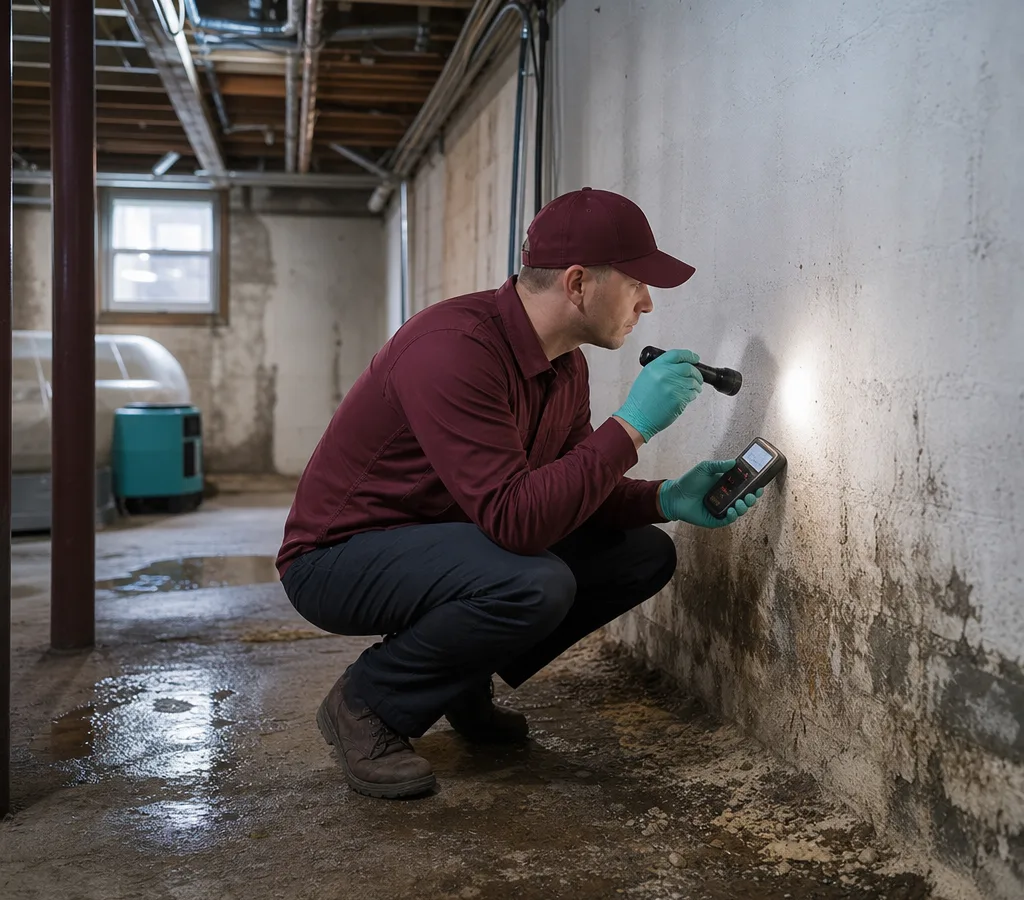
Searching for mold inspection Pittsburgh usually starts the same way: there's a musty smell, staining on drywall, a damp basement corner, or a recent leak that never fully dried. An inspection is the step that turns a hunch into clear, written findings so you can decide what to do next.
A thorough mold inspection is a moisture-and-building assessment first. Mold follows water. The contractor focuses on where moisture is getting in or staying trapped, then documents any visible fungal growth and conditions that support it.
Interview and history: What changed recently—such as a roof leak, plumbing issue, basement seepage, new HVAC, or humidifier use—where odors are strongest, and whether symptoms show up in specific rooms.
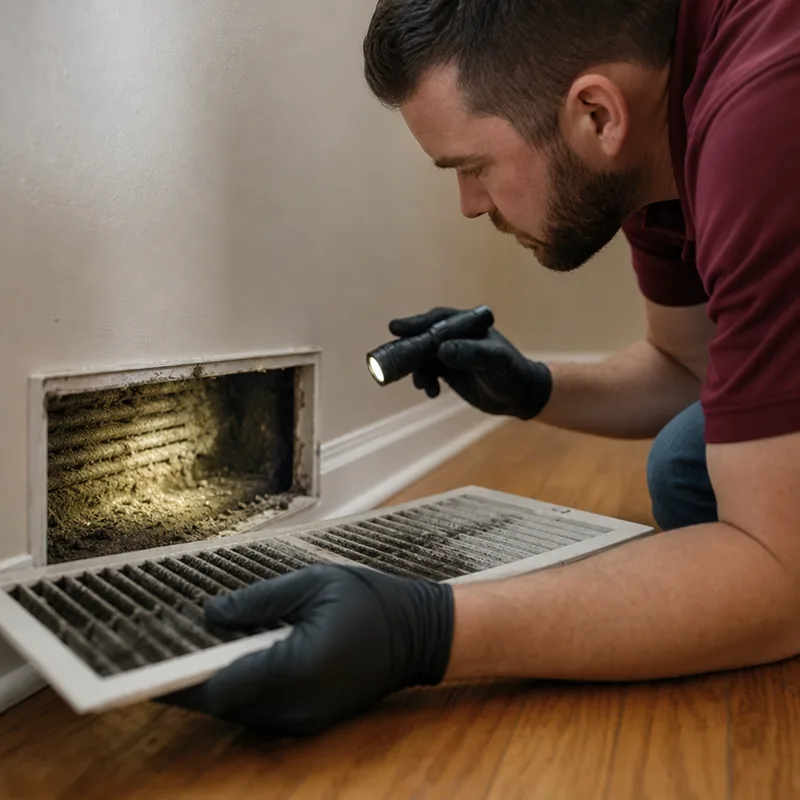
Visual survey: A targeted look at known trouble areas, including basements and crawlspaces, windows, toilets, sinks, sump pits, and exterior walls.
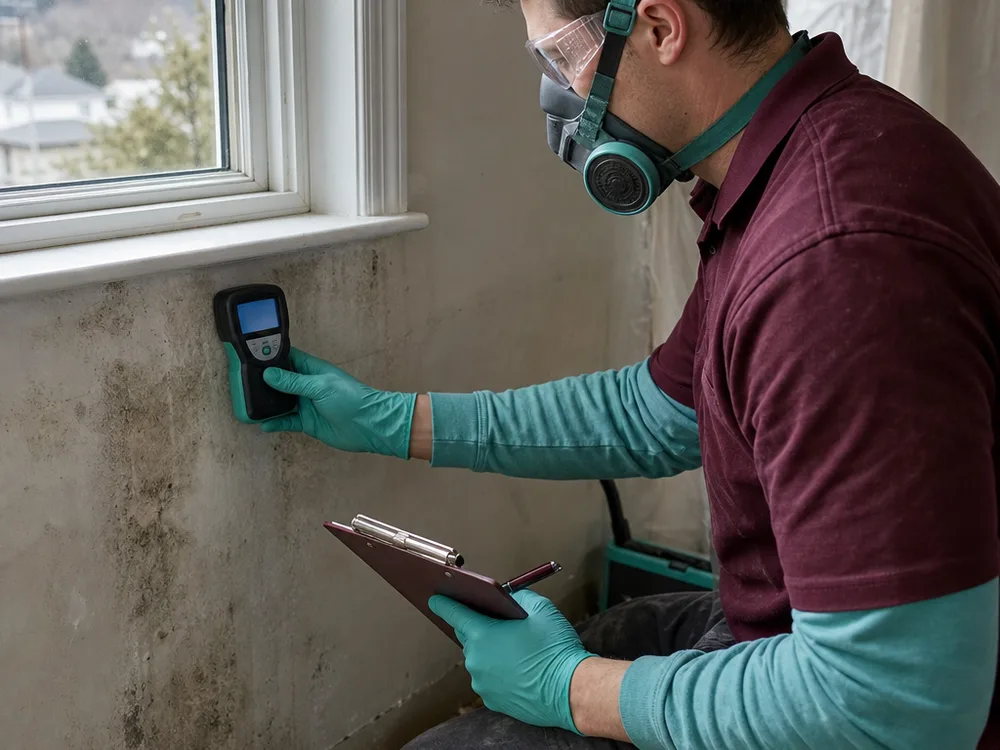
Moisture mapping: Moisture meters and sometimes infrared imaging help locate wet building materials that appear dry at the surface.
Surface sampling when appropriate: Tape lifts or swabs may document what's on a surface when photographs do not provide enough information for a decision.
Air sampling when appropriate: This may be used to compare indoor and outdoor spore levels or evaluate a room where mold is suspected but not visible.
Documentation: Photos, notes about affected materials, and a plain-language summary of likely moisture sources make the findings easier to understand.
If you're dealing with obvious growth after a leak or long-term dampness, some homeowners move directly toward mold removal after a quick assessment call. If the situation is unclear, a dedicated inspection can help prevent the wrong scope of work.
Why one call helps
You explain where you're seeing staining, odors, or water damage one time, and the details are used to connect you with a local contractor who handles inspections.
Some situations call for an inspection and documentation; others call for moisture control first. The contractor can tell you what makes sense after hearing what's happening.
Pittsburgh housing often includes older basements, additions, and mixed materials, so moisture can show up in ways that aren't obvious without a careful walk-through.
A good inspection focuses on where moisture is coming from, what materials are affected, and what needs to be corrected so the problem doesn't repeat.
You speak with the contractor directly, ask questions, and decide whether to move forward with any next steps.
From concern to findings
Describe the rooms involved, any recent leaks, whether a dehumidifier or sump pump is in use, and what prompted the concern, such as odor, staining, peeling paint, or condensation.
The contractor reviews the areas you flagged and checks likely moisture pathways, including plumbing penetrations, openings, exterior wall transitions, basements, and attic access points.
Moisture meters identify damp materials that may be feeding growth. Photos and notes are taken so findings are clear and repeatable.
When the source or extent is unclear, the contractor may recommend surface or air sampling to support a remediation plan or document conditions for a property file.
You receive a plain explanation of what was found, the likely moisture driver, and recommended next steps, which may include fixing leaks, drying, containment, or removing affected materials.
If you're seeing recurring staining, musty odors, or damp materials, a focused inspection can turn guesswork into a documented plan. Describe the situation once and get connected with a local contractor who handles mold assessments in Pittsburgh.
CALL NOW: 412-900-8052Assessment details

Common questions
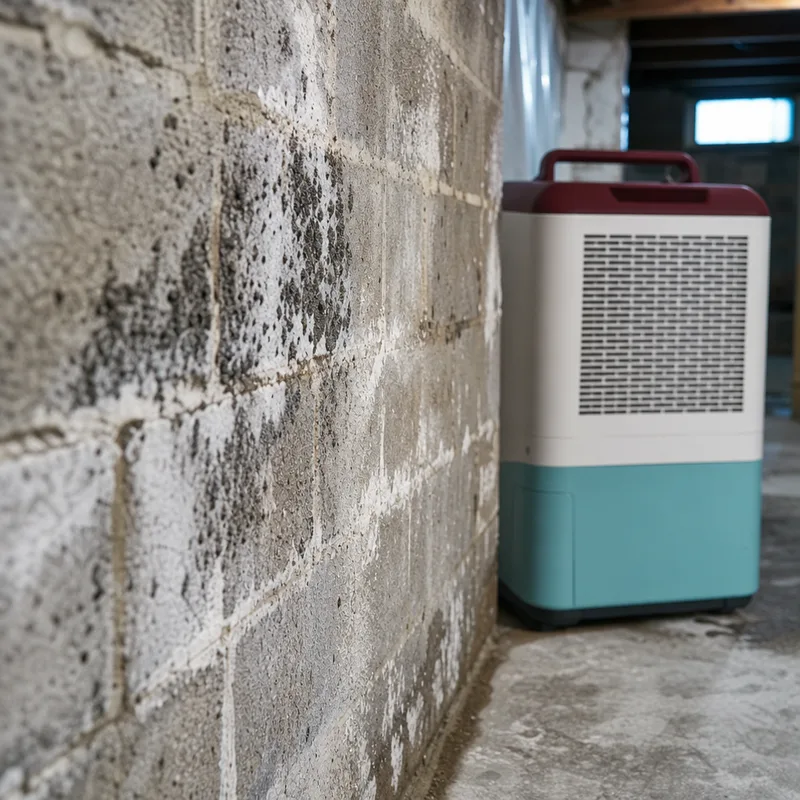
An inspection makes sense when staining keeps returning, the area is larger than a simple wipe-down, there's a musty odor you cannot place, or the spot is tied to a leak or damp building materials. In many Pittsburgh homes, basements and exterior walls can remain damp long enough that the problem is in the materials, not only on the surface.
Most inspections start non-invasive with a visual survey and moisture readings. The contractor explains if limited access is needed to confirm what is behind a surface. If opening a small area is recommended, ask what the opening would involve, how it would be contained, and what repair work would be required afterward.
Air testing is not always necessary because visible growth and moisture readings often provide enough information to plan the next step. Air sampling can be useful when mold is suspected but not visible, when documentation is needed for a property file, or when you want a comparison between a specific room and outdoor air.
Be ready to describe where the concern is, when it started, any known water events, whether a dehumidifier or sump pump runs, and what materials are involved. Photos on your phone can help you describe what you're seeing, even if the contractor will document it on-site.
Mold and musty odors are usually symptoms, while the cause is moisture from leaks, condensation, or water intrusion. A contractor typically checks plumbing-adjacent areas first, then condensation patterns near windows and exterior walls, and finally basement dampness and ventilation that may keep materials from drying.
If removal is recommended, the contractor should explain what areas would be contained, which materials would be removed or cleaned, and what must be corrected so the moisture source does not keep feeding the problem. If you decide to proceed, you coordinate directly with the contractor on the work plan and timing.
Mold Removal Pittsburgh takes your call, notes what you're seeing and where, then connects you with a local contractor who handles mold inspections in the Pittsburgh area. You discuss findings, documentation, and any next steps with the contractor and decide whether to move forward.
Explain the odor, staining, or water history once and get connected with a local contractor who can inspect the area, document what's going on, and walk you through next-step options.