Describe the situation once
Share where the mold is, what materials are involved, and what caused the moisture, then get connected with a contractor who takes on black mold removal.
Serving Pittsburgh, Pennsylvania & surrounding areas
Calls answered around the clock
Describe what you're seeing once and we'll connect you with a local contractor who handles containment, cleanup, and moisture control.
This page covers one part of what we arrange in Pittsburgh, Pennsylvania. For the full picture of how mold work is handled across the city, see Mold Removal Pittsburgh.
Containment, cleanup and moisture control
If you're searching for black mold removal Pittsburgh PA, you're usually dealing with two problems at once: the mold you can see and the moisture that keeps feeding it. A proper job focuses on both.
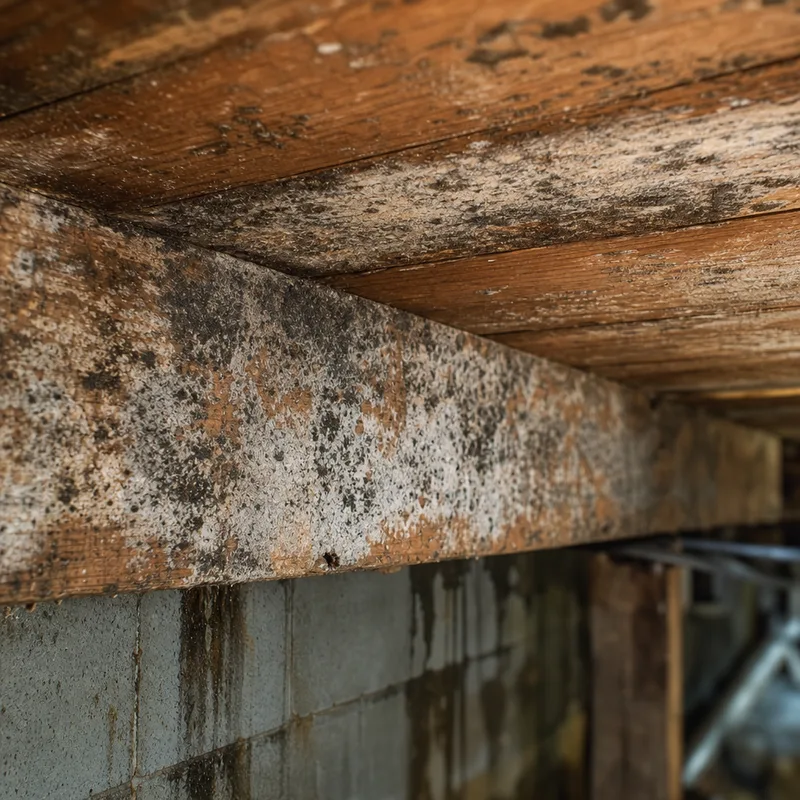
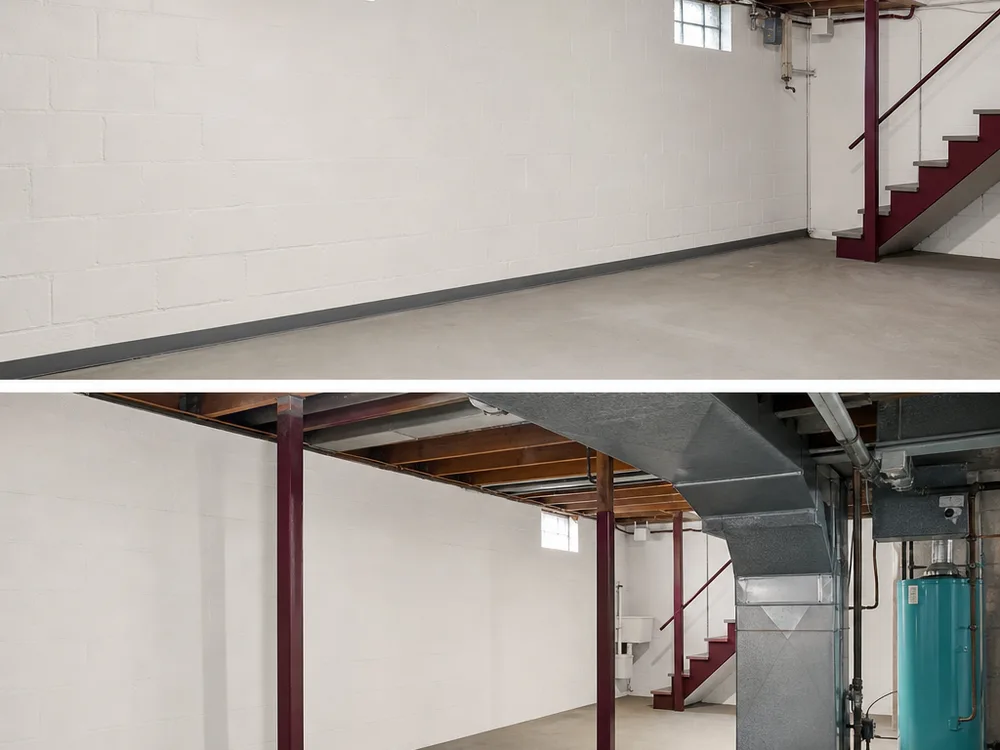
A contractor typically starts by identifying where growth is active and what materials are affected. In Pittsburgh, this often shows up in basements with fieldstone or older block walls, bathrooms where ventilation is weak, and attics where air leaks meet cold roof decking. A contractor may use moisture readings and visual inspection to map out the work area before any demolition or cleaning begins.
Once the scope is clear, most black mold removal projects follow the same fundamentals:
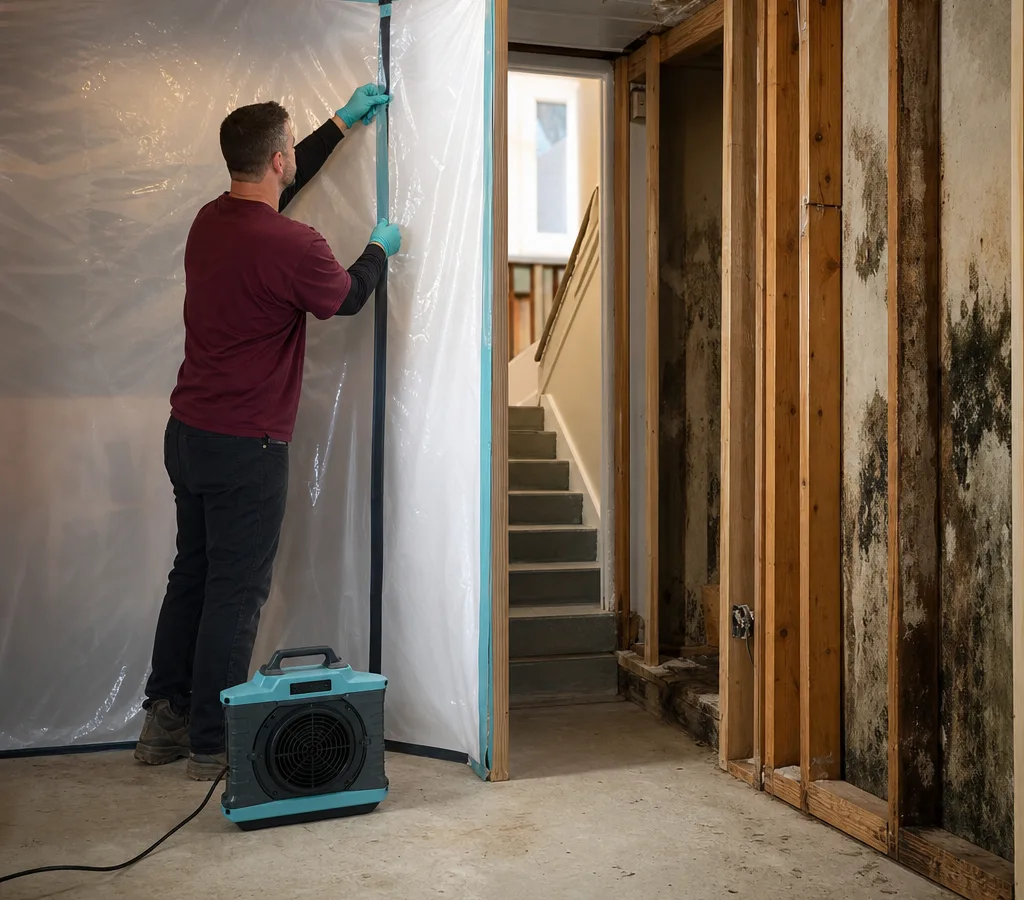
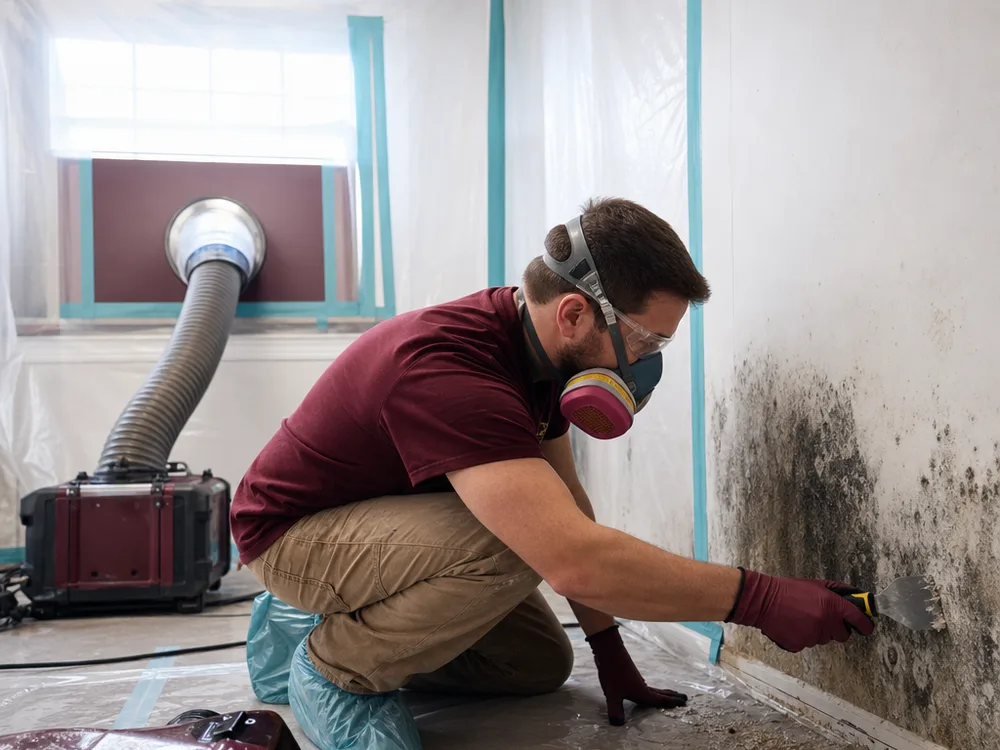
The work area is sealed with plastic, and the air is controlled so dust and spores stay inside the containment. This is especially important when mold is on drywall, insulation, or other porous materials that release particles when disturbed.
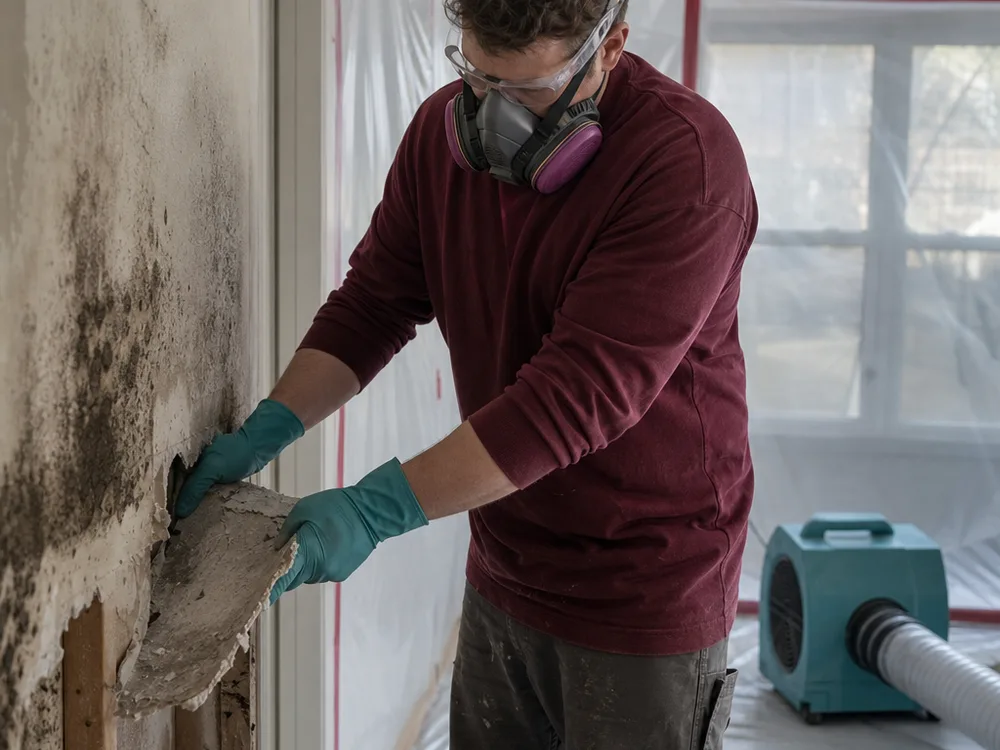
Porous materials that are significantly contaminated are often removed and bagged inside the containment. Remaining surfaces are cleaned using methods appropriate to wood framing, concrete, masonry, or metal. HEPA vacuuming and wiping are common parts of the process.
Mold regrows when moisture remains. A contractor will typically discuss what caused the dampness, such as basement humidity, a bathroom exhaust issue, exterior drainage, or a roof or plumbing leak.
Mold can look like many things, and the right approach depends on where it is and what it is growing on. You stay in control of the decision. We connect you with an independent local contractor, you talk through the scope directly, and you decide whether to move forward.
Why one call helps
Share where the mold is, what materials are involved, and what caused the moisture, then get connected with a contractor who takes on black mold removal.
Older basements, mixed materials, and long-term humidity issues change how a job is contained and cleaned. The contractors we connect you with work in the Pittsburgh area and see these conditions often.
The contractor can explain what will be removed versus cleaned in place, how the area is contained, and what needs to happen to reduce the chance of regrowth.
Containment and HEPA filtration are about keeping the rest of the home livable while the affected area is addressed.
Good black mold removal includes a plan for the moisture source, whether that means drying, ventilation changes, or repair coordination.
From call to moisture control
Tell us where you're seeing growth, how long it has been there, and whether there was a leak, flooding, or ongoing condensation.
You'll speak directly with an independent contractor who handles this kind of work in Pittsburgh and nearby communities.
The contractor confirms what is affected, explains containment, and identifies which materials can be cleaned and which may need removal.
The work area is isolated, debris is controlled, surfaces are cleaned, and drying steps are used based on what is wet or holding moisture.
The contractor outlines what to change or repair, such as ventilation improvements, managing basement humidity, or correcting a leak source.
If you're seeing dark staining, a musty odor, or recurring growth, describe the area once and get connected with a local contractor who can explain the safest next step.
CALL NOW: 412-900-8052Work and material details
Common questions
It depends on where the work is and how the area is separated from the living space. A contractor will explain containment and whether any rooms should be avoided while work is underway, especially if the growth is near HVAC returns, a stairwell, or a frequently used hallway.
Cleaning is usually for non-porous or semi-porous surfaces where contamination can be removed from the surface, while removal is common for porous materials like drywall, insulation, carpet, and some ceiling tiles. The contractor can explain which approach matches the material and extent of growth.
Leave the area as undisturbed as possible and avoid scraping or dry-brushing visible growth. If you can do it safely, take a few photos, note recent leaks or condensation, and clear a small access path so the contractor can assess the area without moving personal items.
Bleach can discolor stains, but it is not a complete remediation plan and can be unreliable on porous materials where moisture and contamination sit below the surface. A contractor focuses on containment, the correct removal or cleaning method, and the moisture condition that allowed growth to start.
Recurring growth usually points to ongoing moisture, such as persistent humidity, condensation on cooler masonry walls, or water intrusion after heavy rain. Older Pittsburgh basements often have mixed materials where moisture moves differently, so the contractor will typically examine both the wet area and the conditions that keep it damp.
If mold is near returns, ductwork, or air handlers, particles can move beyond the original area when the system runs. Tell the contractor where vents and returns are located so they can advise whether the system should be adjusted during the work and whether duct cleaning is relevant.
The most helpful details are the location, the size of the area, the materials involved, and what you think started it, such as a leak, flooding, condensation, or a roof issue. With that information, we can connect you with a local contractor who handles black mold removal in Pittsburgh.
Call Mold Removal Pittsburgh and describe the moisture source and the affected area once. We'll connect you with a local contractor who can explain containment, cleanup options, and what needs to change so the problem is less likely to return.